Cacao Ceremony: Ancient Mayan Ritual and How to Practice It Today
What Is a Cacao Ceremony?
A cacao ceremony is a ritual practice rooted in ancient Mayan and Mesoamerican tradition, in which ceremonial cacao, unprocessed, high-quality cacao prepared as a drink, is consumed in a group or individual setting as a tool for reflection, intention-setting, and connection.
In the ancient Maya world, cacao wasn’t food. It was sacred.
Royal courts served frothy cacao drinks at coronations and diplomatic gatherings. Priests offered cacao to the gods at temples. Warriors drank it before battle. Couples exchanged it at weddings. The dead were buried with cacao vessels to carry into the underworld.
The cacao tree, Theobroma cacao, meaning “food of the gods” in Greek, was believed by the Maya to be a divine gift from the feathered serpent Kukulkan, who brought it from the otherworld as a gift to humanity. Its preparation and consumption was never casual.
Today, cacao ceremonies are practiced globally, adapted from these ancient traditions into modern wellness and community ritual contexts. They range from simple solo practices to large group gatherings led by trained facilitators.
The Role of Cacao in Ancient Maya Religion
Understanding the modern cacao ceremony requires knowing what cacao meant to the people who invented it.
Maya iconography and hieroglyphic texts, particularly those found at Copán, Palenque, and Bonampak, show cacao appearing everywhere that power, death, and divine favor intersect. Vessels decorated with cacao pod glyphs have been found in royal tombs throughout the Maya world. The Popol Vuh, the Maya creation narrative, places cacao among the foods discovered in the Mountain of Sustenance, the mythological source of all crops given to humanity.
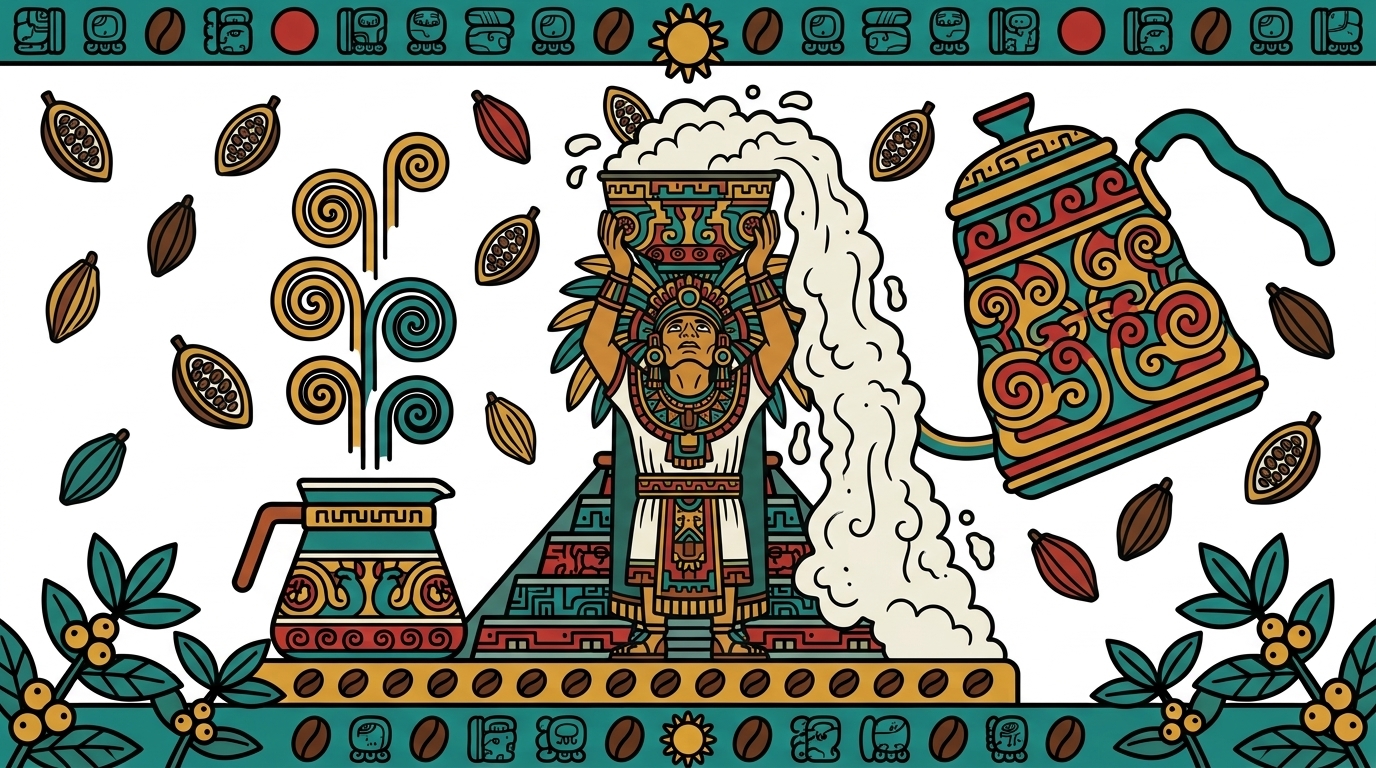
The cacao drink itself, called kakaw, was fundamentally different from modern hot chocolate. It was made from fermented and dried cacao beans, ground into a paste, mixed with water, vanilla, chili peppers, and achiote (which gave it a reddish color), and poured back and forth between vessels to create a thick foam. It was served cold or at room temperature and was not sweetened with sugar. That came much later, after Spanish colonization.
The froth was considered the most sacred part of the drink. Maya nobles would pour cacao from a height to maximize foam, and the foam itself was associated with divine energy and the breath of the gods.
Cacao as Medicine
The ancient Maya were aware of cacao’s physical effects long before modern science confirmed them.
Cacao contains theobromine (a mild, long-lasting stimulant), caffeine (in small amounts), phenylethylamine (associated with elevated mood), and anandamide (a compound that activates the same receptor as THC in cannabis). It also contains magnesium, iron, and antioxidants in concentrations significantly higher than processed chocolate.
The Maya used cacao medicinally, as a treatment for fatigue, as a restorative drink for the sick, and as a birth ritual drink for mothers. Hernández, the Spanish chronicler, documented dozens of cacao-based remedies used by Mayan healers in the 16th century.
This is one reason modern cacao ceremonies typically use ceremonial-grade cacao rather than cacao powder or commercial chocolate: the full-fat, minimally processed form retains more of the compounds that produce the gentle heart-opening and mood-elevating effects practitioners describe.
How a Cacao Ceremony Works Today
Modern cacao ceremonies vary widely depending on the facilitator, cultural context, and purpose. Most share a loose structure:
Preparation and Intention
Before the ceremony begins, participants set an intention: a question, a feeling they want to explore, something they want to release or call in. This mirrors the Mayan practice of dedicating an offering to a specific deity or purpose.
Ceremonial cacao is prepared with hot (not boiling) water, often with additions like cinnamon, cayenne, vanilla, or honey. The dose in a ceremony setting is typically 40–50g of pure cacao paste, higher than a casual drinking chocolate.
Opening and Connection
Most ceremonies begin with a moment of silence, prayer, or acknowledgment of the tradition the practice comes from. Some facilitators open with songs, breathwork, or a brief history of cacao’s origins in Mesoamerica.
Participants typically drink the cacao together, slowly, with attention, not as a beverage to be consumed while distracted.
The Heart of the Ceremony
After drinking, participants typically move through a facilitated process that might include:
- Guided meditation or visualization
- Journaling and reflection
- Sharing within the group
- Movement, sound, or breathwork
- Silent sitting
The theobromine in cacao produces a warm, gentle opening sensation in many people, often described as a softening of emotional defenses and an increased sense of empathy and clarity. This is not psychedelic; cacao is not a psychoactive substance. The effect is subtle and largely depends on the participant’s receptivity.
Closing and Integration
Ceremonies typically close with gratitude: to the cacao, to the land it came from, to the people who grew it. Participants are encouraged to sit with what came up in the ceremony and to integrate it in the days that follow.
How to Do a Simple Cacao Ceremony at Home
You don’t need a facilitator or a group to do a meaningful cacao practice. Here’s a simple solo version.
What you need:
-
30–40g ceremonial-grade cacao paste (look for single-origin, minimally processed; Guatemalan or Honduran origin is traditional)
-
200ml hot water (not boiling, around 70°C / 160°F)
-
Optional: pinch of cayenne, cinnamon stick, vanilla, honey to taste
-
A quiet space and 30–60 minutes
Process:
- Set an intention. Before you begin, take a moment to consider what you’re bringing to this time: a question, something you want clarity on, or simply a willingness to be present.
- Chop or break the cacao and melt it with a small amount of hot water, whisking until smooth.
- Add remaining water and whisk vigorously to create foam. Add spices if using.

Traditional Mexican Molinillo
Hand-carved wooden whisk — the traditional way to froth chocolate.
Approximate price · Check current price on Amazon
If you prefer a faster, more consistent froth without the technique a molinillo requires, a handheld milk frother produces similar results in seconds.

Zulay Milk Frother Handheld
Quick froth for hot chocolate, lattes, and matcha.
Approximate price · Check current price on Amazon
- Hold the cup for a moment before drinking. Acknowledge where the cacao came from: the tree, the farmers, the ancient tradition you’re participating in.
- Drink slowly and without distraction. No phone, no background noise.
- After drinking, sit in silence for at least 15–20 minutes. Journal if that’s helpful. Let whatever comes up surface without forcing it.
- Close by expressing gratitude: to yourself, to the cacao, to the tradition.
The History and Origin of the Cacao Ceremony
The cacao ceremony is one of the oldest continuous ritual practices in the Americas.
The earliest archaeological evidence of cacao use comes from Honduras, where pottery fragments at Puerto Escondido contained cacao residue dating to approximately 1400 BCE. By the Classic Maya period (250–900 CE), cacao ceremonies had become central to political, religious, and social life across the Maya world.
At Copán, painted vessels show rulers consuming cacao at coronation ceremonies. At Bonampak, murals depict nobles sharing cacao at diplomatic gatherings. The Dresden Codex, one of only four surviving Mayan books, contains references to cacao offerings made to specific gods on specific calendar dates.
The ceremony’s form varied by context. Royal cacao ceremonies were elaborate affairs with specific vessels, preparation rituals, and invocations to deities. Village-level ceremonies were simpler but followed the same core structure: preparation with intention, consumption in a ritual setting, and acknowledgment of cacao’s sacred origin.
After the Spanish conquest, Catholic missionaries suppressed many Mayan religious practices, including cacao ceremonies. But the tradition survived in rural Maya communities, particularly in the highlands of Guatemala and western Honduras, where it continued in modified form alongside Catholic practice.
The modern Western revival of the cacao ceremony began in the early 2010s, led largely by practitioners who had studied with Maya communities in Guatemala. Today’s ceremonies draw on the ancient framework while adapting it for contemporary participants.
The Modern Revival and Cultural Respect
Cacao ceremonies have grown significantly in popularity in the West since the 2010s, particularly within yoga, wellness, and spiritual communities.
This popularity comes with a responsibility to approach the practice with respect rather than appropriation. The cacao ceremony is a living tradition, not a historical artifact. Maya communities in Guatemala, Honduras, and Mexico still practice cacao rituals as part of ongoing spiritual life.
Practicing a cacao ceremony thoughtfully means:
- Learning where the tradition comes from (Mayan and broader Mesoamerican origin)
- Using cacao that is ethically sourced and traditionally grown
- Not exoticizing or commodifying the practice beyond recognition
- Acknowledging that what you’re doing is inspired by, not equivalent to, the ancient Mayan form
The best cacao ceremonies feel less like a product experience and more like a quiet act of gratitude: for the plant, the people who grow it, and the civilizations that discovered its sacred quality thousands of years ago.
Coffee and Cacao: Two Traditions, One Origin
The same mountain valleys of Honduras and Guatemala that produced ancient Mayan cacao culture now produce some of the world’s finest coffee.
Our coffees come from the Copán and Marcala highlands, the heart of the ancient Maya world. The farmers who grow them are the descendants of the same people who first cultivated cacao in these forests. Our collection includes Sigua Coffee Finca El Zapote, a single-origin specialty from Siguatepeque, Honduras — grown at 1,550 masl on land that has sustained Honduran communities for centuries.
A morning coffee can carry that same quality of intentional pause that a cacao ceremony offers. The Mut light roast brewed in a pour over, held with both hands, drunk slowly. That’s a ceremony too, in its way.
For the ancient recipe that started it all, see our Mayan hot chocolate recipe. And for a wider look at what the ancient Maya ate and drank alongside cacao, see our guide to Mayan civilization food.
Frequently Asked Questions
What is a cacao ceremony? A cacao ceremony is a ritual practice rooted in ancient Mayan and Mesoamerican tradition, in which ceremonial cacao is consumed in a structured setting as a tool for reflection, intention-setting, and connection. Modern versions are adapted from these ancient traditions.
Is a cacao ceremony spiritual? It can be, though it doesn’t have to be. The practice ranges from deeply spiritual and culturally grounded (as practiced in Maya communities) to more secular wellness contexts focused on mindfulness and community connection.
What does ceremonial cacao do? Ceremonial cacao contains theobromine (a gentle stimulant), phenylethylamine (associated with elevated mood), and anandamide. Many people describe a warm opening sensation, increased clarity, and heightened emotional sensitivity. The effect is subtle, not psychedelic.
How much cacao do you use in a ceremony? Ceremonial doses are typically 35–50g of pure cacao paste. This is significantly more than a normal drinking chocolate and high enough to produce noticeable effects from the theobromine.
What did the Maya put in their cacao drink? The ancient Maya mixed cacao paste with water, chili peppers, vanilla, and achiote (a red plant dye). It was served cold, unsweetened, and frothed by pouring between vessels from a height.
Where does ceremonial cacao come from? The best ceremonial cacao comes from Guatemala, Honduras, Belize, and southern Mexico, the heart of the ancient Maya world, where cacao has been cultivated for over 3,000 years.
Water temperature matters for cacao just as it does for coffee. Too hot destroys the subtle compounds. A $9 thermometer keeps you in the right range.

ThermoPro TP03 Digital Thermometer
Instant-read temperature in 3 seconds — for water, food, anything.
Approximate price · Check current price on Amazon
For the full symbolic context of cacao in Mayan religion — the gods, the rituals, the glyphs — Miller and Taube’s dictionary is indispensable.

The Gods and Symbols of Ancient Mexico and the Maya
An illustrated dictionary of every Mesoamerican deity and symbol.
Approximate price · Check current price on Amazon
For the deep history of cacao as medicine, currency, and sacred substance:

The True History of Chocolate
How a bitter Mesoamerican drink conquered the world.
Approximate price · Check current price on Amazon
From the same highlands that gave the Maya cacao. Shop Honduras coffee from Mayan Origin.