Mayan Hot Chocolate Recipe: Cacao, Chili & Honey
The Drink That Came Before Chocolate
Before chocolate bars, before hot cocoa packets, before Swiss Miss: there was xocolātl.
The ancient Maya were the first civilization to consume cacao as a drink, and what they made would be almost unrecognizable to anyone who grew up on Swiss hot chocolate. No sugar. No milk. No cream. The original Mayan chocolate drink was bitter, frothy, spiced, and sometimes cold, depending on the ceremony.
It was not a dessert drink. It was a sacred one. This Mayan chocolate recipe recreates the original as closely as possible while remaining genuinely enjoyable to modern palates.
A Brief History of Mayan Hot Chocolate
Cacao (Theobroma cacao, meaning “food of the gods” in Greek) originated in Mesoamerica. The Maya were cultivating and consuming cacao at least 3,500 years ago. There is archaeological evidence of cacao use at sites in Honduras dating to 1400 BCE.
The highland valleys of Copán, Honduras, where we source our private label coffees, were ancient cacao-growing territory. Cacao was so valued by the Maya that it served as currency. Merchants traded it across Mesoamerica from the Gulf Coast to the Pacific. Rulers stored it in treasuries.
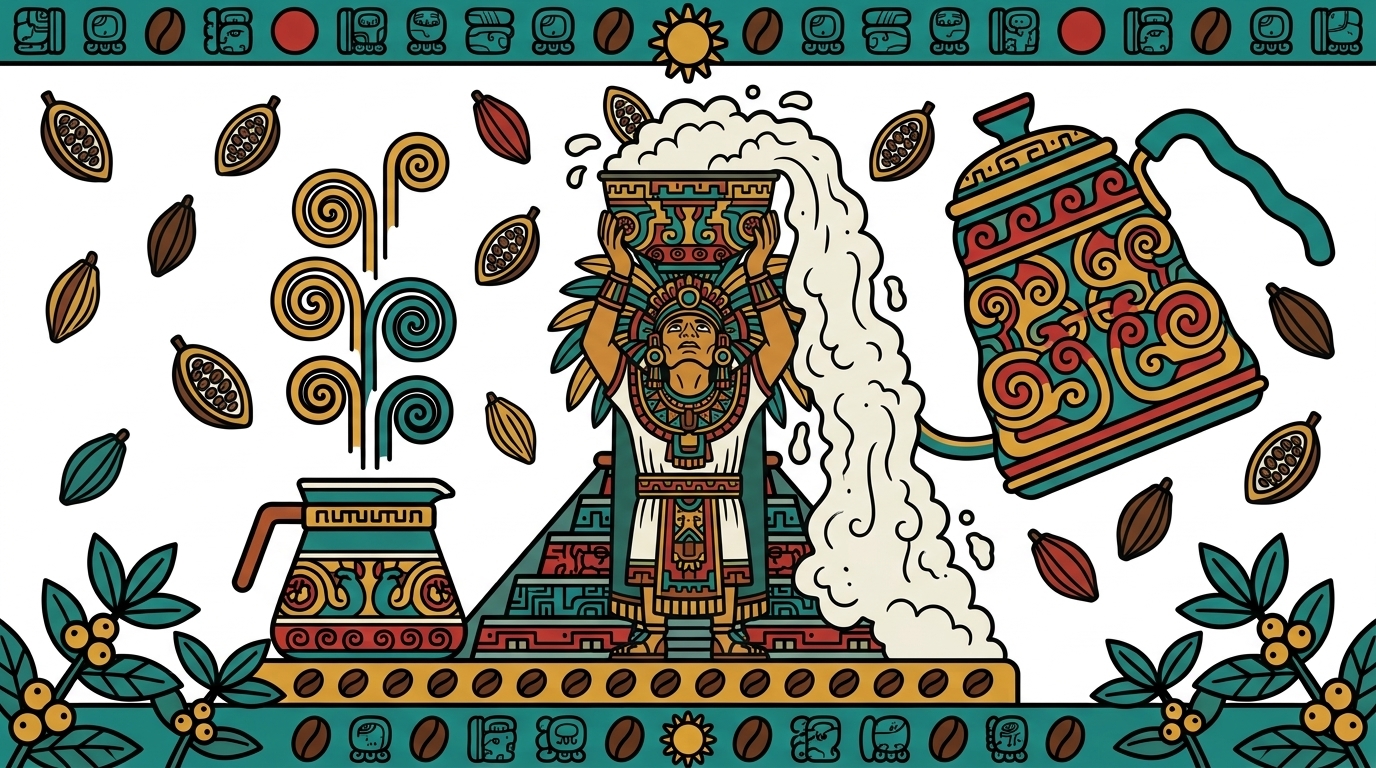
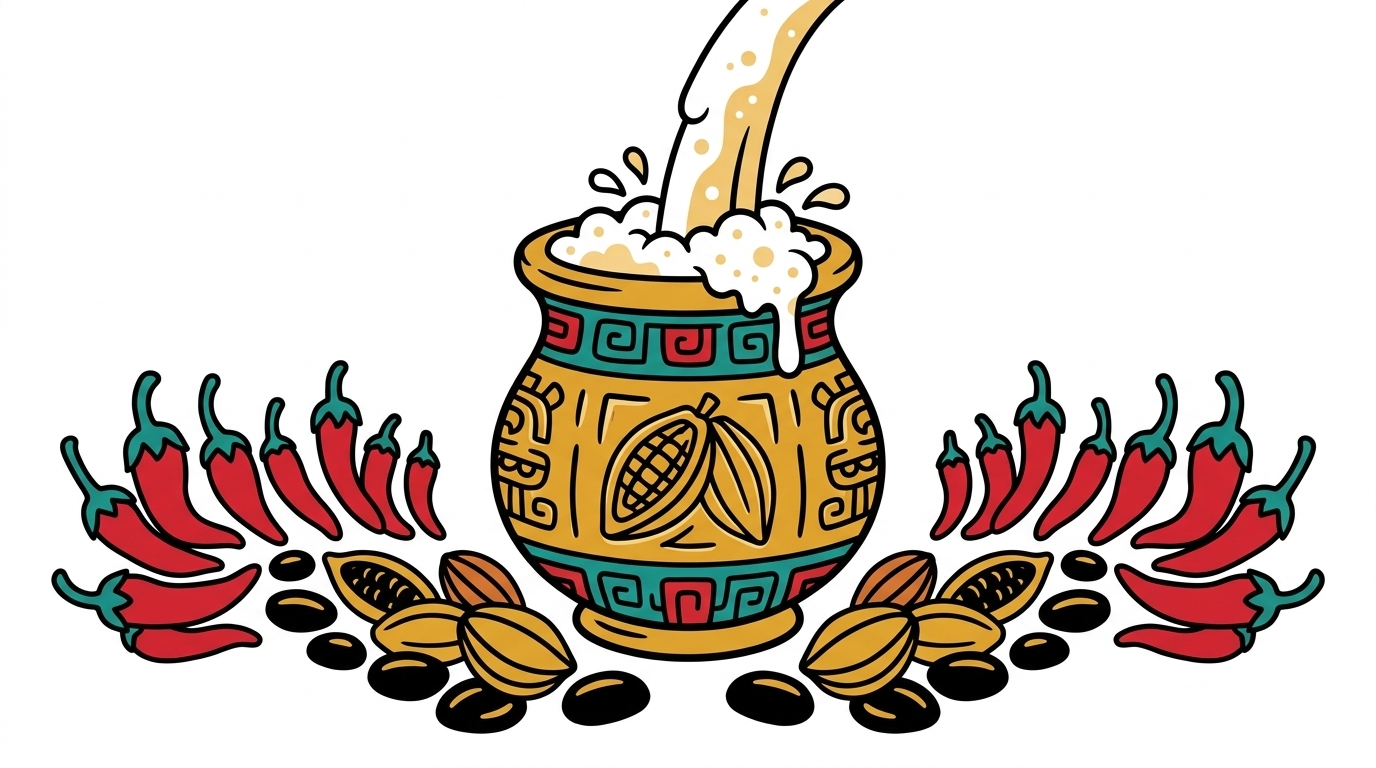
The drink itself was prepared by grinding roasted cacao beans into a paste, mixing with water and spices, and creating froth by pouring the liquid from one vessel to another from a height. The froth was considered the most valuable part of the drink. The more froth, the better.
Mayan chocolate drinks were consumed:
- In royal courts and elite ceremonies
- Before warfare (for warriors seeking strength)
- At weddings and betrothals (cacao was part of the marriage contract)
- As offerings to the gods, particularly Kukulkan and the maize god
- By healers as medicine
When Hernán Cortés arrived in Mexico in 1519 and encountered the Aztec emperor Moctezuma, who reportedly drank 50 cups of cacao per day, the Europeans were baffled. They brought the cacao back to Spain, where it was sweetened, warmed, and transformed into the hot chocolate we know today.
The sweetened version spread across Europe within decades. The original Mayan version nearly disappeared.
For the ritual practice the Maya built around cacao, see our guide to the Mayan cacao ceremony. And for a complete picture of what the ancient Maya ate and drank, see our guide to Mayan civilization food.
Ingredients
This is the most accurate recreation of the original drink that’s still enjoyable for modern palates. You can control the bitterness by adjusting the cacao amount and the sweetness by adjusting the honey.
For 1 serving:
- 2 tablespoons raw cacao powder (or finely ground cacao nibs)
- 1 cup water, or oat milk for creaminess
- 1 small dried chili (árbol or ancho), or ¼ tsp cayenne powder
- ½ teaspoon ground cinnamon
- Pinch of sea salt
- 1 teaspoon raw honey, to taste (the Maya used Jimerito, a local stingless bee honey)
- Optional: ¼ tsp vanilla extract, pinch of allspice
Why these ingredients? The chili was standard in Mayan cacao drinks, adding heat and stimulant properties. Cinnamon was a common Mesoamerican spice (though originally it was likely Mexican cinnamon, also called canela, which is softer than Ceylon or Cassia). Sea salt amplifies chocolate flavor. The honey adds just enough sweetness to balance without masking the cacao’s complexity.
The cacao powder matters more than any other ingredient here. You want raw cacao, not Dutch-processed cocoa. Raw cacao retains more theobromine (the compound that gives chocolate its stimulant effect) and more of the volatile flavor compounds that disappear during heavy processing. The difference in a simple drink like this, where cacao has nowhere to hide, is obvious.
Instructions
Step 1: Warm Your Liquid
Pour the water (or oat milk) into a small saucepan over medium heat. You want it very warm but not boiling, around 80°C / 175°F. Boiling destroys some of cacao’s more delicate aromatic compounds.
Water temperature makes or breaks cacao. Too hot and you scorch the volatile aromatics. Too cool and the powder won’t dissolve properly. An instant-read thermometer takes the guesswork out.

ThermoPro TP03 Digital Thermometer
Instant-read temperature in 3 seconds — for water, food, anything.
Approximate price · Check current price on Amazon
Step 2: Whisk in the Cacao
Add the cacao powder and whisk continuously until fully dissolved and smooth. No lumps.
Step 3: Add the Spices
Add the chili (whole), cinnamon, and salt. If you’re using cayenne powder instead of a whole chili, add it now. Reduce heat and simmer for 3 minutes, stirring occasionally.
Step 4: Remove the Chili and Froth
Fish out the whole chili. Now comes the most important step: create the froth.
The Maya poured the drink from one vessel to another, from a height, to create foam. You can replicate this with a milk frother (the easiest method), or by whisking vigorously for 60–90 seconds, or by using a blender for 15 seconds.
The froth is not optional. It’s the difference between a flat cacao drink and something genuinely special.
The traditional Mesoamerican frothing tool is the molinillo — a carved wooden whisk that you spin between your palms. It’s the direct descendant of the pouring-from-height method the Maya used, and it produces a thick, lasting foam. If you want speed, a handheld milk frother does the job in seconds.

Traditional Mexican Molinillo
Hand-carved wooden whisk — the traditional way to froth chocolate.
Approximate price · Check current price on Amazon

Zulay Milk Frother Handheld
Quick froth for hot chocolate, lattes, and matcha.
Approximate price · Check current price on Amazon
Step 5: Sweeten and Serve
Pour into a cup. Add honey to taste. The Maya drank this from gourd bowls and clay cups, which cool faster than ceramic, so drink it while it’s warm.
Variations
Cold version (traditional): Let the drink cool, then pour over ice. The original Mayan drink was often served cold. The pouring from height created the froth even with cold liquid.
Richer version: Replace water with oat milk or a mix of oat milk and coconut milk for a creamier texture closer to modern hot chocolate.
Modern spiced version: Add a pinch of allspice and cardamom alongside the cinnamon. Not traditional but excellent.
Double strength: Use 3 tablespoons of cacao powder for a darker, more intense cup. This is closer to what Mayan elites would have drunk. They didn’t dilute their cacao.
Why Cacao Nibs Work Better Than Powder
If you want to take this recipe further, use finely ground cacao nibs instead of commercial cacao powder. The difference is significant.
Cacao nibs are simply roasted cacao beans broken into small pieces. When you grind them (in a spice grinder or high-speed blender), you get raw cacao in its closest-to-original form, with the full fat (cacao butter) intact. This creates a richer, silkier texture and a more complex flavor than processed cacao powder.
The Maya used freshly ground cacao paste. We can’t quite replicate that without industrial equipment, but finely ground nibs come close.
The History of Mayan Hot Chocolate
Mayan hot chocolate was never a casual drink. For over 3,000 years, cacao held a place in Mayan society that no other food or drink could match. It was currency, medicine, ceremonial offering, and status symbol.
The earliest evidence of cacao consumption comes from Honduras. Pottery shards found at the archaeological site of Puerto Escondido, in the Ulúa Valley, contained cacao residue dating to approximately 1400 BCE. That makes Honduras one of the birthplaces of the world’s oldest chocolate tradition.
By the Classic period (250-900 CE), Mayan chocolate had become deeply embedded in royal and religious life. Painted vessels from this era show rulers drinking frothy cacao at court ceremonies. The glyph for cacao (kakaw) appears on hundreds of ceramic vessels, often alongside images of gods and supernatural beings.
The Maya didn’t just drink Mayan chocolate at feasts. They prescribed it. Healers used cacao preparations to treat fever, fatigue, and digestive ailments. Mixed with different herbs and spices, cacao became a versatile base for Mayan medicine.
When the Spanish arrived in the 16th century, they found cacao culture thriving across Mesoamerica. They brought it back to Europe, added sugar and milk, and created the hot chocolate we know today. But the original Mayan recipe, the one in this guide, predates that European version by millennia.
Cacao and Coffee: Two Crops, One Soil
There’s a connection between this ancient Mayan drink and the coffee we ship from Honduras.
Our Balam, Mut, and Kukulkan coffees all grow in the highlands of Copán, Honduras, the same mountainous region where the ancient Maya cultivated cacao for thousands of years. The volcanic soil and high altitude that make Copán’s cacao exceptional are the same conditions that produce our specialty arabica coffee.
Two crops, one origin. The Maya planted cacao in these valleys. We grow coffee in the same mountains, carrying the same tradition of care for what the land produces.
Our wider collection includes Mythoz, winner of the Global Coffee Awards 2025, sourced direct-trade from 109+ producer families across five Honduran regions — another expression of what this land produces when tradition meets quality.
Frequently Asked Questions
What is Mayan hot chocolate? Mayan hot chocolate is the original pre-Columbian cacao drink — made with ground cacao, water, chili, and honey. It predates modern hot chocolate by thousands of years. The Maya consumed it as a ceremonial, medicinal, and elite drink. It was bitter, frothy, and spiced, with no sugar and no dairy.
How is Mayan hot chocolate different from regular hot chocolate? Modern hot chocolate uses milk, sugar, and processed cocoa powder. Mayan hot chocolate uses water, raw cacao, dried chili, and honey. The result is less sweet, more bitter, spicier, and richer in true cacao flavor. The froth — created by pouring the liquid from a height — was considered the most valuable part of the drink, not an afterthought.
What are the ingredients in Mayan hot chocolate? The core ingredients are raw cacao powder (or ground cacao nibs), water, a dried chili pepper, cinnamon, sea salt, and honey. That’s it. No milk, no sugar, no vanilla in the original. Modern adaptations sometimes add oat milk for creaminess — that’s a reasonable substitution.
What is Mayan hot chocolate called? The ancient Mayan word for their cacao drink was xocolātl (also spelled xocolatl). This Nahuatl word is the origin of the English word “chocolate.”
Did the Maya drink hot or cold chocolate? Both, but cold was common. The Maya created froth by pouring the liquid from a height, and cold liquid holds froth well. Some versions were consumed warm, but the cold, frothy version appears frequently in Mayan art and texts.
What chili did the Maya use in chocolate? Various peppers native to Mesoamerica, similar to modern árbol, ancho, or habanero varieties. The heat varied by region and preference. For this recipe, a mild árbol or ancho works well; add cayenne if you want more heat.
Is Mayan hot chocolate bitter? More bitter than modern hot chocolate, yes, but this recipe is balanced with honey and spices to be genuinely pleasant. Pure cacao without sweetener is very bitter. Use enough honey to balance your taste.
Can I use cocoa powder instead of cacao powder? Yes, but the flavor will be different. Raw cacao powder is less processed and retains more complex flavor compounds. Cocoa powder (Dutch-processed) has been alkalized, which reduces acidity and bitterness but also removes some flavor depth. Both work in this recipe.
What did the Maya use instead of sugar? Honey. The Maya kept stingless bees (Melipona beecheii, called Xunan Kab) and harvested their honey for sweetening food and drink. Stingless bee honey has a more complex, slightly acidic flavor than conventional honey.
Mayan hot chocolate cools fast. A ceramic-lined travel mug holds the temperature for hours and won’t leave a metallic taste the way stainless steel can.

Fellow Carter Move Mug
A travel mug designed by the same people who make the Stagg kettle.
Approximate price · Check current price on Amazon
Go Deeper
If the history of cacao fascinates you, Sophie and Michael Coe’s The True History of Chocolate traces the drink from its Mayan origins through 3,000 years of transformation.

The True History of Chocolate
How a bitter Mesoamerican drink conquered the world.
Approximate price · Check current price on Amazon
Explore more Mayan flavors. Shop our coffee from the Copán highlands.