Ixchel: Mayan Moon Goddess of Medicine & Fertility
Who Was Ixchel?
Ixchel (also spelled Ix Chel) was the principal moon goddess of the ancient Maya, a complex and multifaceted deity who ruled over medicine, healing, weaving, fertility, and the cycles of the moon.
Unlike many moon deities in other cultures, Ixchel was not merely gentle. She had two forms: a young, radiant goddess associated with fertility and creation, and an older, fierce form associated with floods and destruction. The Maya understood that the moon, like life, contains both light and shadow.
Her name in Yucatec Maya means roughly “Lady Rainbow” or “She of the Pale Face.” She was the counterpart to the sun god Kinich Ahau: where the sun was masculine, solar, and constant, Ixchel was feminine, lunar, and ever-changing. Among the great Mayan deities, only Kukulkan, the Feathered Serpent, rivaled her in cultural importance.
The Two Faces of Ixchel
Ixchel’s duality made her uniquely powerful in Mayan religion.
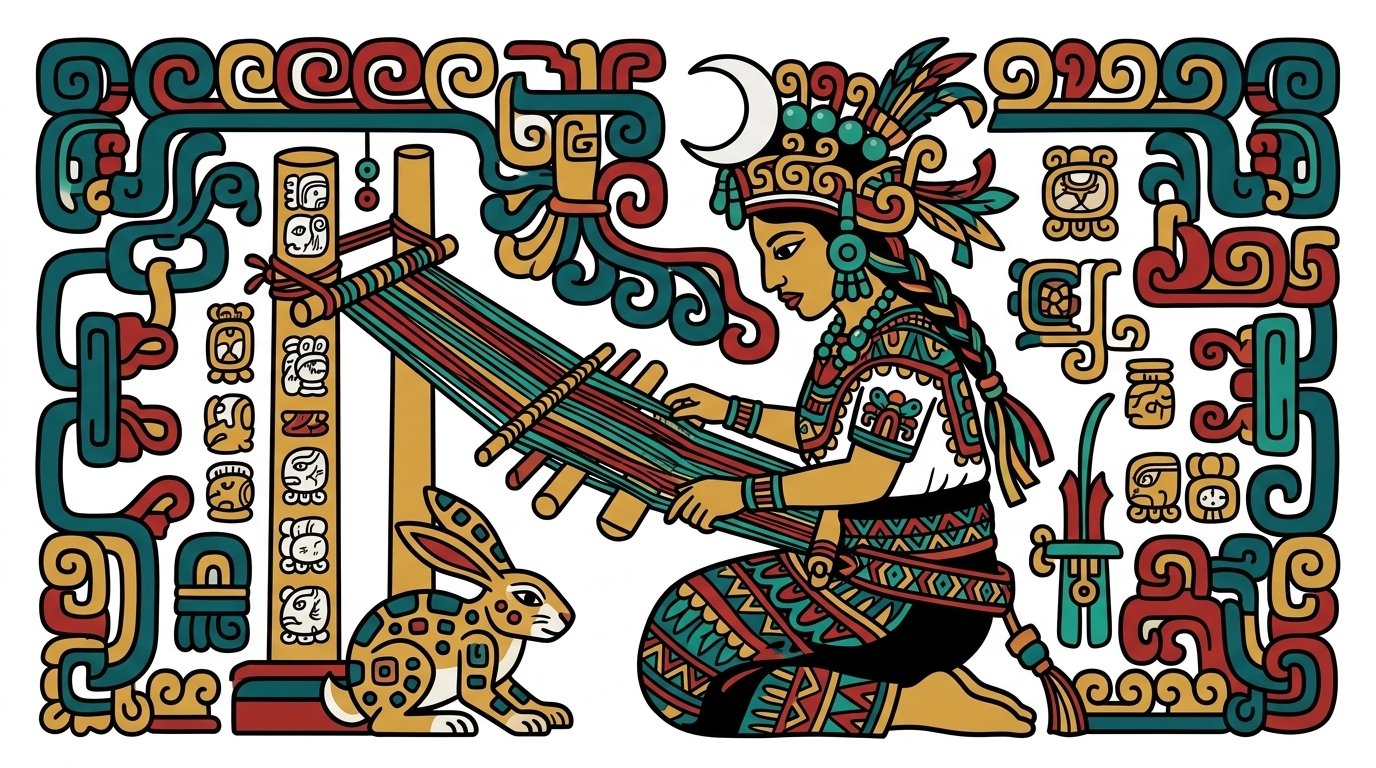
In her young form, she was depicted as a beautiful woman holding a rabbit, the animal of the moon, and associated with the gentle, creative aspects of the lunar cycle: fertility, childbirth, weaving, and medicine. Women prayed to her for safe pregnancies. Healers invoked her when treating the sick. Weavers placed her image on their looms.
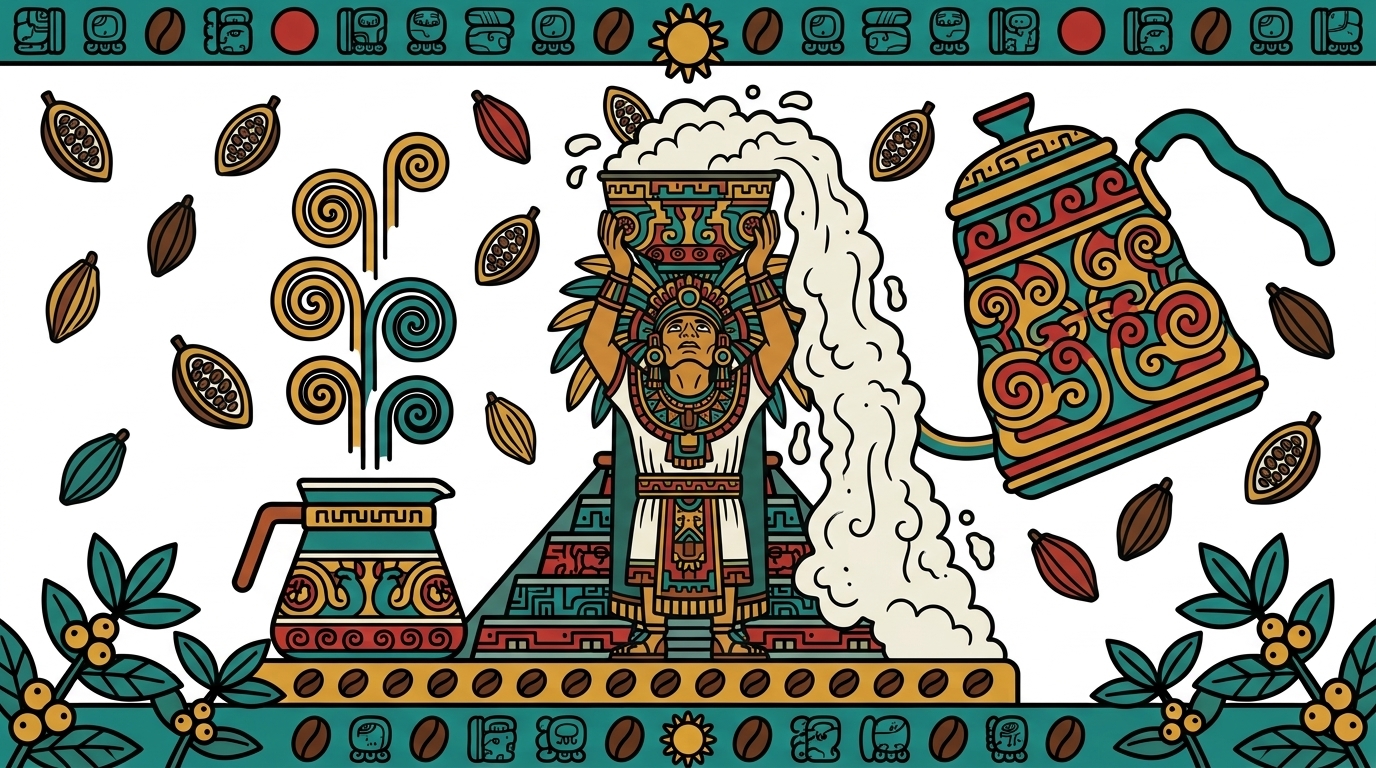
In her old form, Ixchel was depicted as a skeletal old woman wearing a skirt of crossbones, with serpents in her hair and a vessel on her head from which she poured endless water. This was the flood Ixchel, the goddess who could wash away the world. The Maya understood that the same moon that brings healing rains can also bring destruction.
This duality wasn’t seen as contradictory. For the Maya, power contains both creation and destruction. The same goddess who delivered babies could flood the corn fields. Understanding both faces was part of understanding the world.
The Island of Cozumel: Ixchel’s Sacred Home
Ixchel’s primary temple was on the island of Cozumel, off the coast of the Yucatán peninsula. Cozumel was called Ah Cuzamil Peten, the Island of Swallows, and was considered sacred ground.
Maya women made pilgrimages across open water to reach her shrine. This was not a casual journey. Crossing the Caribbean in a dugout canoe required courage, preparation, and faith. Women seeking fertility, safe childbirth, or healing would make this crossing, often at significant personal risk, to lay offerings at Ixchel’s feet.
The shrine at Cozumel was one of the most important pilgrimage sites in the entire Maya world. When the Spanish conquistador Hernán Cortés landed on Cozumel in 1519, he found her temple still active, and immediately ordered it destroyed and replaced with a Christian cross.
Ixchel and Healing
Medicine in the Mayan world was inseparable from religion. Disease was understood as a spiritual imbalance, and healing required both physical treatment and ritual intervention.
Ixchel was the patron of healers. Ah kin (diviners), midwives, and herbalists all called on her. The Maya pharmacopoeia was sophisticated: they used hundreds of plants medicinally, including cacao (for energy and wound treatment), tobacco (for ritual and pain management), and numerous jungle plants that modern science has validated as medically active.
The Ritual of the Bacabs, a colonial-era text that preserved ancient Mayan healing prayers, contains numerous invocations to Ixchel. These weren’t simple superstitions. They were part of a complete system of medicine that sustained Maya communities for centuries.
Robert Sharer’s The Ancient Maya covers Ixchel’s role in healing, fertility, and lunar cycles in the detail that shorter introductions cannot.

The Ancient Maya (6th Edition)
The most comprehensive academic reference on Mayan civilization.
Approximate price · Check current price on Amazon
Miller and Taube’s illustrated dictionary covers every Mayan deity and symbol — over 250 entries, each with context and images.

The Gods and Symbols of Ancient Mexico and the Maya
An illustrated dictionary of every Mesoamerican deity and symbol.
Approximate price · Check current price on Amazon
Ixchel and Weaving
Weaving was one of the most sacred arts in Mayan culture, and Ixchel was its divine patron. Mayan textiles weren’t decorative accessories. They carried cosmological meaning. Colors, patterns, and symbols embedded in woven cloth communicated identity, social status, and religious affiliation.
Ixchel was said to have taught weaving to the first Maya women, and backstrap loom weaving remains a living tradition in Mayan communities across Guatemala and Honduras today. In highland Guatemala especially, Indigenous Maya women weave huipiles, traditional blouses, using patterns that have been continuous for centuries, each design specific to a particular community.
Ixchel and Mut: The Sacred Bird of Mayan Prophecy
We named our light roast coffee Mut in honor of the sacred bird of Mayan prophecy, a connection that flows directly through Ixchel’s world.
Ixchel was associated with birds, particularly the hummingbird, which the Maya connected to the sun’s passage across the sky. Birds, in Mayan cosmology, were messengers between the human world and the divine, creatures that moved through both earth and sky, carrying meaning between realms.
Our Mut light roast carries that spirit: luminous, delicate, alive. Naturally processed at 1,300–1,700 meters above sea level in the highlands of Copán, the heartland of Mayan civilization in Honduras, Mut develops flavors that are unmistakably bright and floral.
Jasmine. Orange blossom. Stone fruit. A honey finish that lingers.
It’s the coffee for pour-over lovers, for slow mornings, for those who want to taste what’s actually in the cup. For technique on getting the most out of Mut, see our pour over guide. To explore Ixchel’s place in the full Mayan pantheon, see our complete guide to the Mayan deities.
Like Ixchel herself: gentle on the surface, complex underneath.
Further Reading

Popol Vuh: The Definitive Edition
The Mayan creation story — the Hero Twins, the gods, the origin of humanity.
Approximate price · Check current price on Amazon
The queens and royal women of the Maya world are covered in Martin and Grube’s Chronicle — including the female rulers who claimed Ixchel’s authority.

Chronicle of the Maya Kings and Queens
Dynasty by dynasty, city by city — every known Mayan ruler decoded.
Approximate price · Check current price on Amazon
Our Mut light roast — the coffee named for Ixchel’s sacred bird — opens up beautifully in a Chemex. The thick filter removes oils and lets the floral notes come through clean.

Chemex Classic 6-Cup
Clean, bright, sweet — the Chemex filter removes oils that other methods keep.
Approximate price · Check current price on Amazon
Frequently Asked Questions
What does Ixchel mean in Mayan? Ixchel (or Ix Chel) translates roughly to “Lady Rainbow” or “She of the Pale Face” in Yucatec Mayan. Ix is a feminine prefix, and chel refers to the rainbow or a pale/luminous quality.
Was Ixchel good or evil? Neither. She was both. The Maya didn’t divide deities into good and evil the way Western traditions do. Ixchel was a goddess of healing, fertility, and creation, but also of floods and destruction. Her power contained both aspects, which made her complete.
Where was the main temple of Ixchel? The primary shrine to Ixchel was on the island of Cozumel, off the Yucatán coast in modern-day Mexico. It was one of the most important pilgrimage sites in the Maya world.
How is Ixchel connected to Mut coffee? Mut is named for the sacred bird of Mayan prophecy. Birds were messengers in Mayan cosmology and associated with moon goddesses like Ixchel. Our Mut light roast is naturally processed and grown in the highlands of Copán, Honduras, carrying the luminous, floral character that Ixchel represents.
Taste the light. Shop Mut Light Roast.